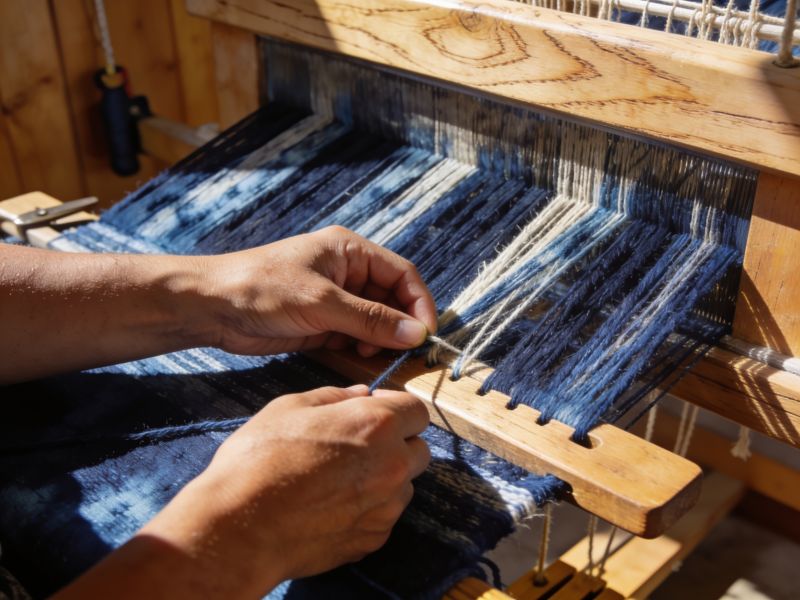
Mamelo isn't a brand you'll find in glossy airport ads or on a celebrity's Instagram feed. It's a small workshop in Oaxaca, Mexico, where three women dye cotton with cochineal and weave on pedal looms that creak like old doors. I stumbled on their work at a Sunday market in 2022—a stack of indigo scarves so heavy they felt like they'd been cut from a rain cloud. The price tag was $85. No logo。no plastic wrap, just a handwritten card with the weaver's name: Elena.That scarf has become my most worn piece of clothing. It's also a quiet argument against the way most of us buy things. Mamelo produces fewer than 200 pieces a year—roughly the same number a fast-fashion factory churns out in a single minute. When I asked Elena why she doesn't scale up, she laughed. "If we make more," she said, "we have to rush the dye. The color gets flat." There's a lesson there about what gets lost when speed becomes the only metric.The brand's approach isn't without friction. Orders take six to eight weeks. Sizes run limited—mostly small through large, with little accommodation for taller frames. I'm 5'10" and the sleeves on their linen shirt hit two inches above my wrist. That's a real drawback, and I won't pretend otherwise. But it's also a reminder that Mamelo isn't trying to be everything to everyone. It's trying to make a few things well, which feels almost radical now.
What strikes me most is the transparency. Each Mamelo piece comes with a tiny passport—a folded paper listing the harvest date of the cotton。the name of the dyer, and the hours logged. My scarf's passport says "14 hours, 3 people, 2 dye baths." I've never seen a mass-market label offer anything close. That kind of data changes how you value an object. You stop thinking of it as a disposable item and start thinking of it as a small record of human effort.Will Mamelo ever grow beyond Oaxaca?Probably not, and maybe that's fine. The brand's founder, a former textile engineer named Marta, told me she'd rather train five more weavers than open a factory. "We're not building an empire," she said. "We're keeping a craft alive." In a market flooded with $12 t-shirts that fall apart after three washes。that stubbornness feels less like a limitation and more like a blueprint. I'll take the six-week wait. The scarf was worth it.